

Birds of Prey Above the Aisne Valley in the Ardennes
The Landscape as Habitat
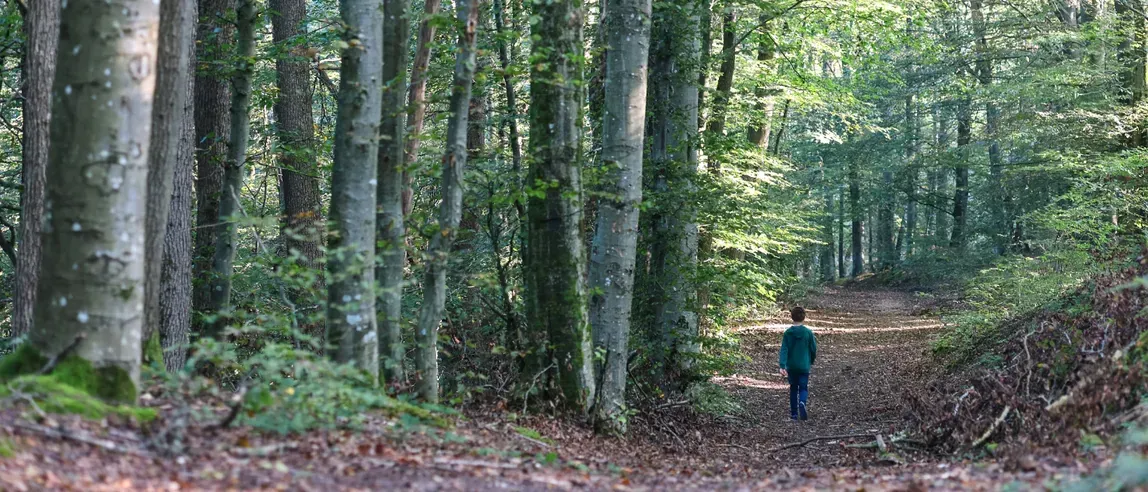
Around Izier (municipality of Durbuy), the Aisne valley forms a small-scale stream valley within the Ardennes relief. The area consists of a mosaic of deciduous woodland, open grassland and gentle slopes. These transition zones create suitable habitat for birds of prey. This is not about rare species or exceptional sightings, but about raptors that structurally belong to this landscape.
Landscape & Ecological Foundation
The Aisne has carved its way through ancient rock, creating a softly undulating valley. Slopes warm more quickly in sunlight than the valley floor itself. Rising air currents allow larger birds of prey to gain height with minimal wing movement. From that height, they gain overview. Open fields make prey visible, while forest edges provide cover. It is precisely this combination — not forest alone and not open land alone — that attracts raptors.
Species Regularly Observed Here
Based on regional nature observations in the Durbuy area, the following species form part of the structural presence in the valley:
Common buzzard (Buteo buteo)
The most frequently observed bird of prey in this region. Often seen circling above open terrain or perched on a post along a field.
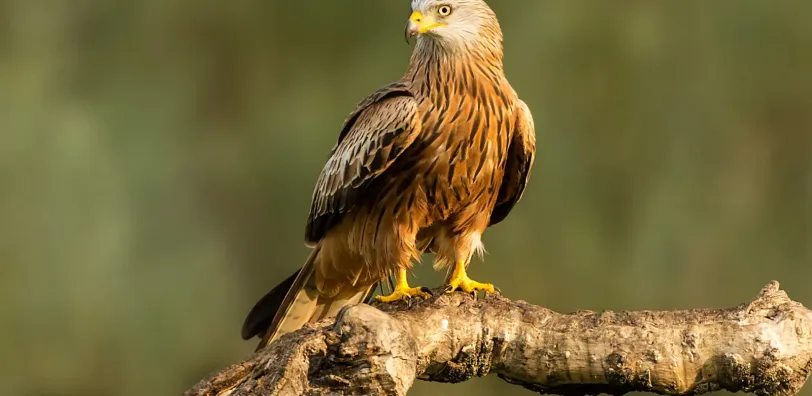
Red kite (Milvus milvus)
Stably present in Wallonia. Recognisable by its forked tail and lighter, gliding flight. More often seen above open valleys than in dense forest.
Eurasian sparrowhawk (Accipiter nisus)
Smaller and faster. Hunts along forest edges and between trees. Less conspicuous, yet well suited to this transitional landscape.
Seasonal Influence
- In spring, activity increases due to territorial behaviour.
- In summer, soaring flights are more visible in sunny weather.
- In autumn, migration can lead to additional sightings.
- In winter, the common buzzard remains consistently present in open areas.
Visibility is strongly influenced by weather conditions and the openness of the landscape.
Where They Are Most Visible
Birds of prey are most often observed:
- above open meadows in the valley
- along transitions between forest and field
- above gentle slopes where thermals develop
- in areas where the valley temporarily widens
They are usually seen during an ordinary walk through the valley or along field tracks. No specific route is required; the landscape itself provides the context.
Key facts
Area: Aisne valley around Izier (municipality of Durbuy)
Landscape type: stream valley with forest edges and open grassland
Most common species: common buzzard
Structurally present species: red kite and Eurasian sparrowhawk
Those walking through the valley usually experience the landscape horizontally: path, stream, slope and forest edge. Occasionally, attention shifts upward. A circling raptor follows the contours of the valley and disappears behind the tree line. That aerial perspective forms part of the natural dynamics of this environment. It adds a quiet layer to the landscape without stepping into the foreground.