

Spring Flora in the Deciduous Forests of the Ardennes
The Forest’s Short Window of Light
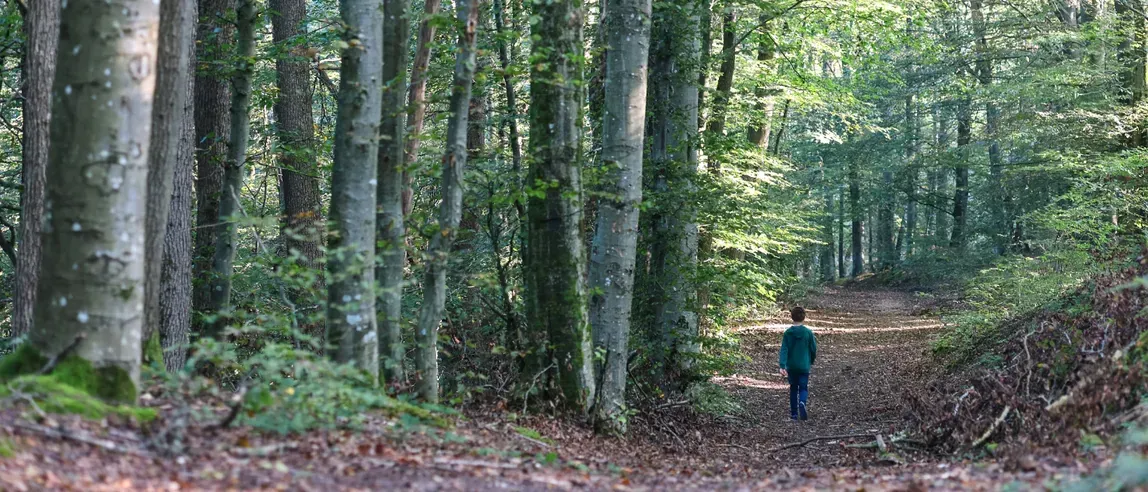
Around Izier (municipality of Durbuy), the slopes of the Aisne valley consist largely of deciduous woodland. In early spring, before the tree canopies are fully in leaf, more sunlight reaches the forest floor than later in the season. This temporary openness determines the rhythm of the spring flora.
Landscape & Soil
The forests around the valley grow on ancient rock layers, with locally loamy soils in the lower sections. Years of leaf fall have created a humus-rich top layer. Spring plants take advantage of the moment when light is still available. Once beech and oak trees are fully in leaf, light levels drop sharply and many flowering species gradually disappear from view.
Species Structurally Present in the Region
According to regional nature observations in the wider Durbuy area, the following species are considered typical spring flora of deciduous forests:
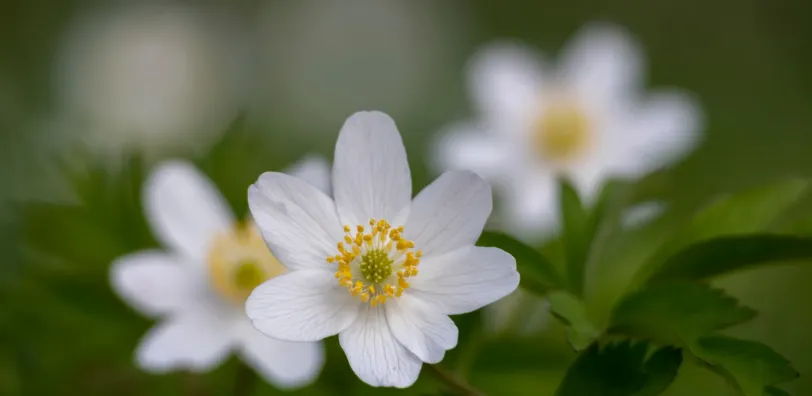
Wood anemone (Anemone nemorosa)
A common species in nutrient-rich deciduous woodland. Forms light carpets on the forest floor in March and April.
Lesser celandine (Ficaria verna)
Occurs in moist areas, along stream banks and in shaded parts of the forest.
Wild garlic (Allium ursinum)
Reported in parts of Wallonia and in comparable stream valleys, particularly on moist, humus-rich soils.
The visibility of these species varies depending on location, soil type and microclimate within the valley.
The Course of the Season
- In March, the first flowering plants appear on sunnier parts of the slopes.
- In April, flowering generally reaches its peak.
- In May, the canopy closes and the emphasis shifts from flowering to leaf development.
Lower parts of the valley often respond slightly earlier than higher, cooler slopes.
Where Flowering Is Most Visible
Spring flora develops mainly:
- on moist forest soils
- on slopes with mature deciduous woodland
- along natural transitions towards stream banks
- in areas with limited soil disturbance
- In coniferous forests or on dry sandy soils, this temporary flowering is more limited.
Key facts
Area: deciduous forests around Izier, Aisne valley (municipality of Durbuy)
Landscape type: slope forest and stream valley
Peak flowering: March–April
Regionally reported species: wood anemone, lesser celandine, wild garlic
Ecological feature: short flowering period before canopy closure
In early spring, the forest floor briefly gains more prominence than the treetops. It is a short phase in the annual rhythm of deciduous woodland, when light and soil become visible together before the canopy closes again over the landscape.